
Your Pelvic Floor Physioterapist

I am a trained physiotherapist and am passionate about the female body and its amazing ability to change. I am a Pelvic Floor physiotherapist in Copenhagen and Sjaelland.
In my work, I focus on creating a safe and present space where you feel seen and understood. My goal is that we find solutions that suit you, your body and your everyday life, so that you can move freely and with greater well-being.
Pelvic Floor Physioterapist Skills and Diplomas
| Owner of PelvicBloom | – | 2025 |
| Uro & Pelvic Floor Physioterapist | Sundhedscenter Tårnby | 2025 |
| Rehabilitering af Seksuel Sundhed | UCL Erhvervsakademi og Professionshøjskole Odense | 2023 |
| The health professional diploma training module 1 “Incontinence” | Professionshøjskolen Metropol | 2017 |
| Basic course in physiotherapeutic examination and treatment of incontinence in adults at the Danish Society of Urology | Gynækologisk og Obstetrisk Fysioterapi (DUGOF) | 2017 |
| Physiotherapist and Uro-Pelvic Floor Physioterpist in the Municipality of Copenhagen within prevention and rehabilitation | Rope holder for pelvic floor and sexual health | 2014-2024 |
| Instructor course in PhysioPilates | Marianne Nørup | 2013 |
| Kinesiotape course Basic and Advanced | Procare | 2012 |
| Independent physiotherapist in Høje-Taastrup Physiotherapy | Rope holder for pregnancy treatment | 2012-2014 |
| Bachelor of Science in Physiotherapy | Physiotherapy education in Copenhagen, Metropol University College | 2008-2011 |
Pelvic Floor Physiotherapy Locations

SanseLab
Etta Camerons Vej 13, st.mf
2450 København SV
kontakt@sanselab.dk

Gro Collective
Mørdrupvej 9b
3060 Espergærde
lise@grocollective.dk

Recommendations from your Pelvic Floor Physioterapist
Udforsk vores specialiserede plejemuligheder, der er dedikeret til at pleje din sundhed og dit velvære.
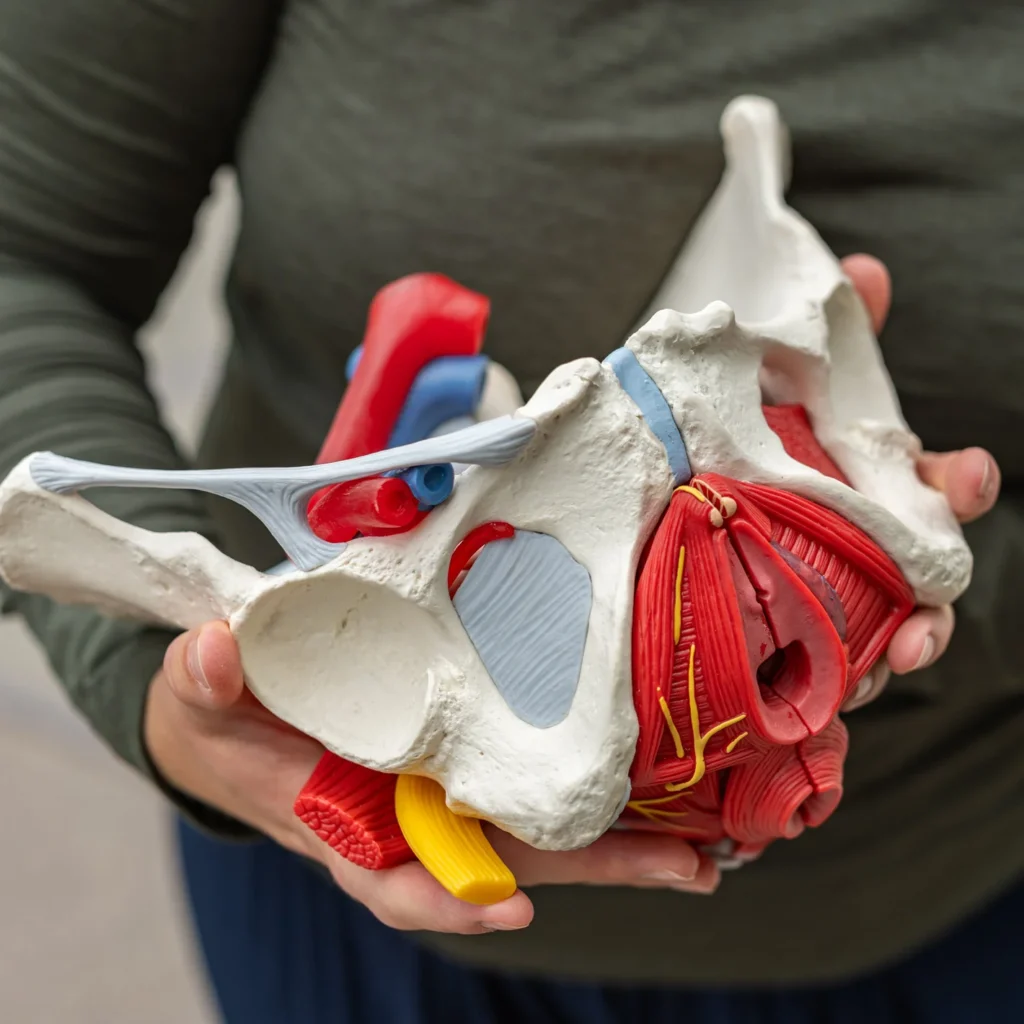
Pelvic Floor
Your pelvic floor consists of muscles, tendons and connective tissue that lie like a kind of “hammock” at the bottom of your pelvis.
The muscles are approximately 1 cm thick and extend from the pubic bone to the tailbone and out to the ischial bones.
The muscles work together to close the urethra, vagina, and rectum.
During pregnancy, the pelvic floor is exposed to a lot of pressure as the baby grows and gains weight. The hormone relaxin makes the tissue more elastic to prepare the body for birth. This makes the muscles and joints more vulnerable to discomfort.
Your pelvic floor has done a huge job during pregnancy and birth. It has supported and stretched to make room for your baby.
After birth, it may need help to find itself again.
This is why the pelvic floor is so important:
The pelvic floor works closely with the abdominal, back and respiratory muscles to stabilize the body and support healthy posture.
It supports your abdominal organs (bladder, uterus and intestines)
It helps you control urine, gas and stool.
It plays an important role in sexual pleasure and function.
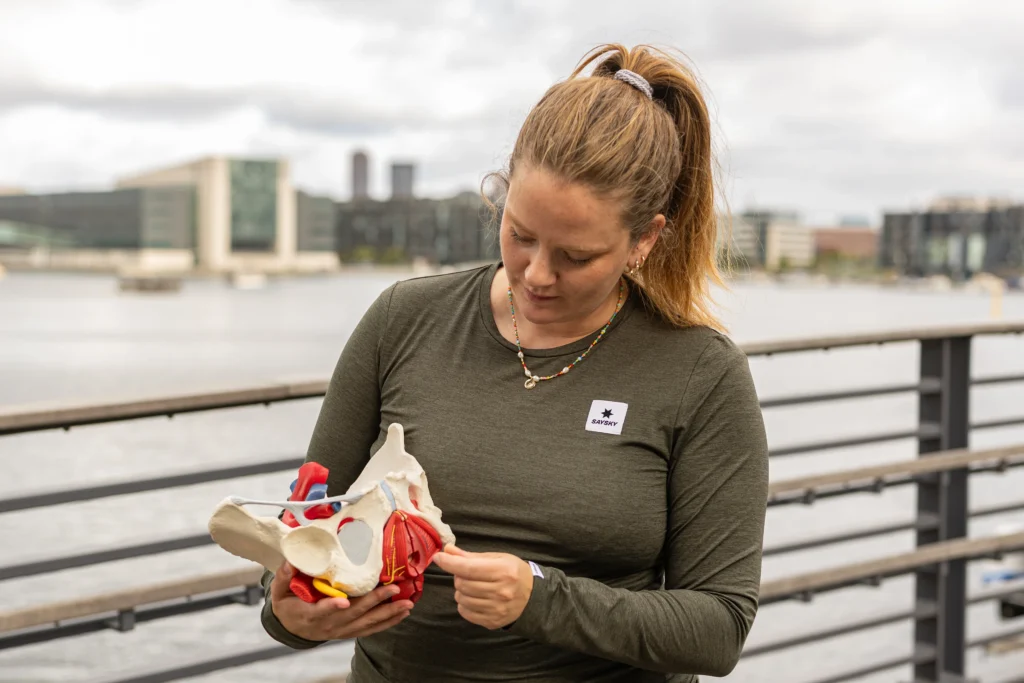
Incontinence
Incontinence is the involuntary loss of urine, gas, or stool.
Did you know that approximately 1/3 of women experience urinary incontinence after giving birth?
Did you also know that pelvic floor training helps 3 out of 4?
You don't have to accept the condition.
I am here to help you.
Good advice:
- Seek help if you experience discomfort
- Drink about 1.5 liters of fluid daily
- Drain water every 3-4 hours to avoid an overfilled bladder
- 1 nighttime urination is common. If you have more than 2 urinations at night, you may want to reduce your fluid intake in the evening.
- Give yourself plenty of time to empty your bladder on the toilet. Avoid using your abdominal muscles to push. Your bladder will empty when you relax. If you have difficulty emptying, you can urinate several times over the course of 5 minutes.
- Empty your bladder before physical activity to avoid leaks.
- Get enough fiber to avoid constipation
- Train your pelvic floor in your daily life, e.g. when lifting heavy things, before sneezing, coughing, etc.
- If you are overweight, you can try losing weight to reduce pressure on the pelvic floor.